
Namahage Toursim in Akita
In Akita, from the moment you step off the train at the main station or exit the plane at the airport, you are greeted by Namahage almost everywhere you go. From Namahage statues, signs, and illustrations to souvenirs such as T-shirts, cookies, and ballpoint pens, Namahage is everywhere. It’s safe to say that Namahage plays a major role in tourism in Akita.
That said, Namahage does not truly belong to Akita City. Namahage lives in the mountains of the Oga Peninsula, and if you really want to encounter Namahage, you need to go to Oga. On Oga, there are two main attractions for any Namahage enthusiast: the Namahage Museum and Namahage Taiko.


The Namahage Museum is, as the name suggests, a museum dedicated entirely to Namahage. The building itself is beautifully designed and set in scenic surroundings next to a large shrine. It is, without a doubt, one of the best tourist experiences in Akita.
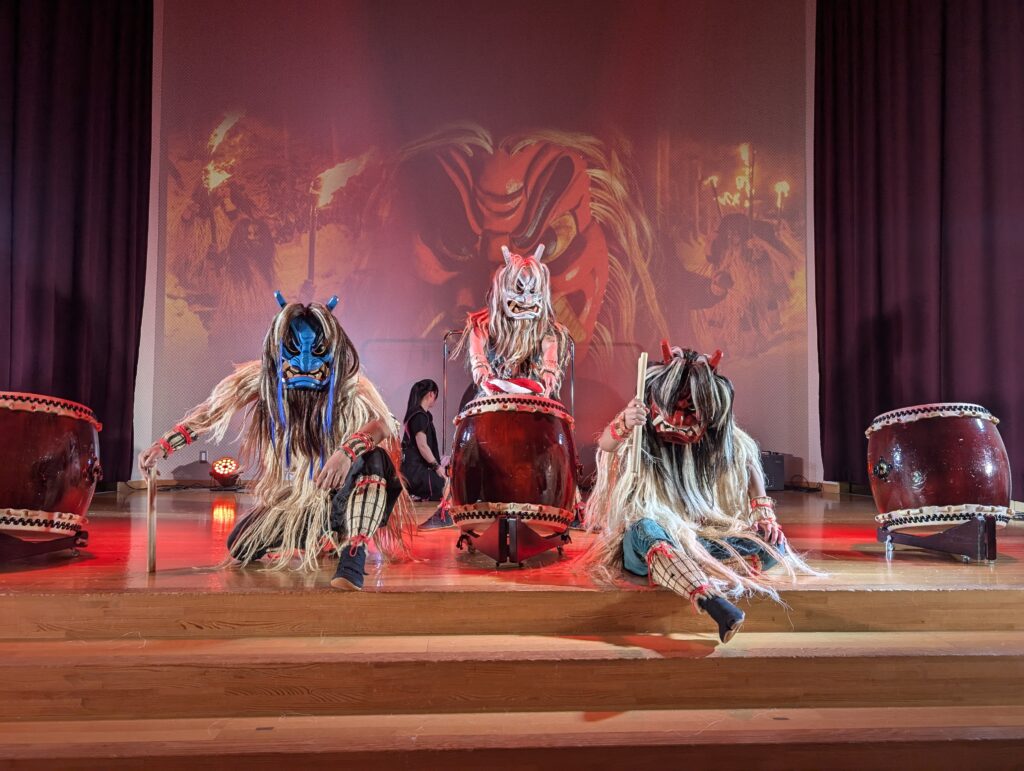
Namahage Taiko is a performance featuring taiko drumming performed in a full Namahage costume. It is absolutely worth experiencing – especially if you plan to stay overnight in Akita – since regular performances are only held in a specially designed concert hall located in the Oga Peninsula’s onsen (hot spring) area.
Navigating Oga can be a bit challenging, as there are no trains. Taxis are an option, but they quickly become expensive. In the following text, I will explain how to get around Oga, what to expect, and how to book the various experiences and services you’ll need.
The Namahage Museum
How to Get to the Namahage Museum
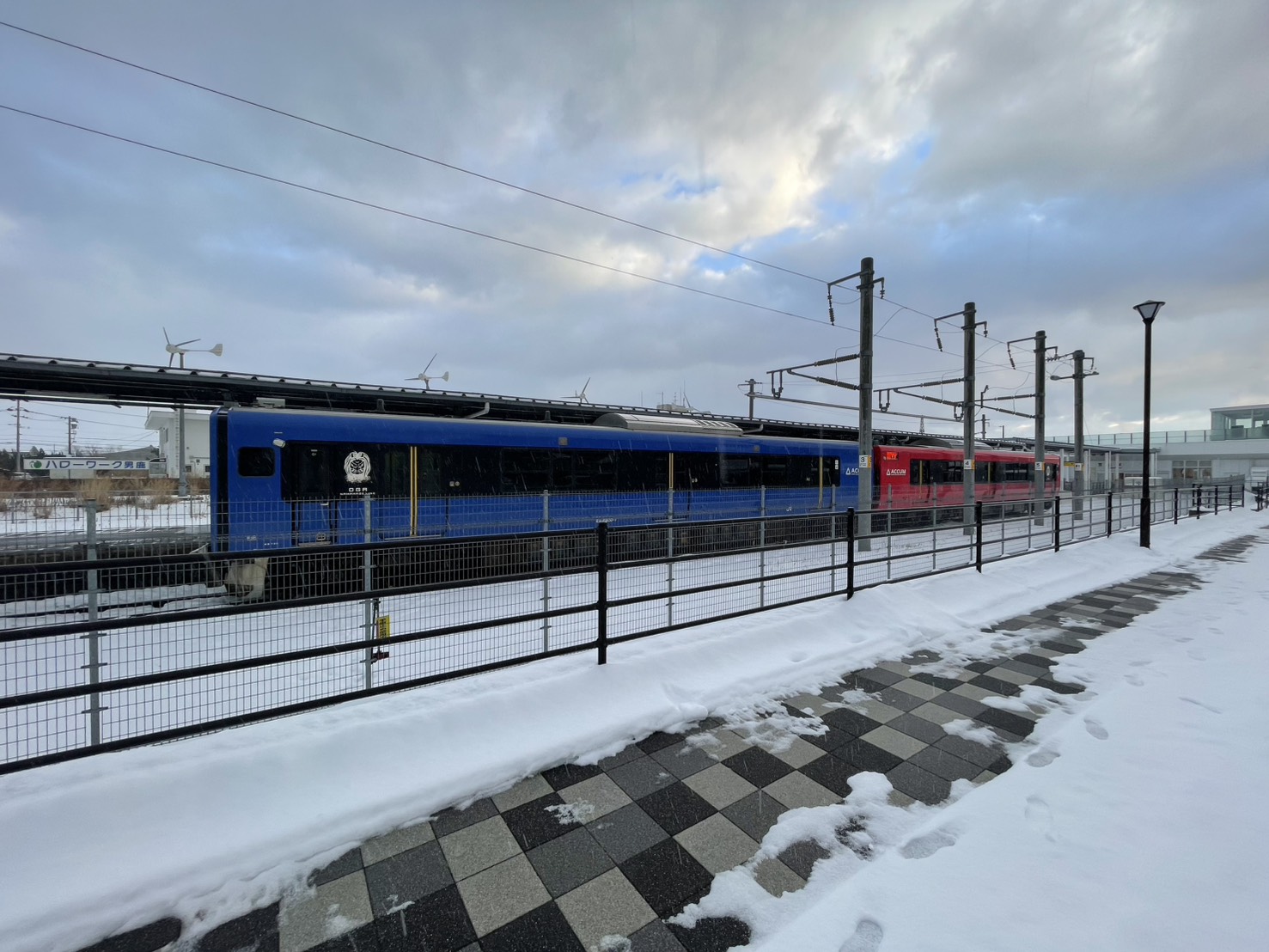
To reach the museum, you first need to get to the Oga Peninsula. This is easily done using Google Maps or a similar service. From Akita Station, take the Ōu Line toward Oga. Along the way, the line changes its name to the Oga Line, but don’t be fooled, it’s still the same train. The journey takes about one hour, and the train itself is decorated with a Namahage theme (don’t forget to take photos).
Once you arrive in Oga, things become a bit more complicated. The museum is located high up in the mountains, and the only way to reach it is by the Namahage Shuttle. The shuttle runs at set intervals, but reservations are required in advance.
I cannot stress this enough: you must make a reservation, or you risk the shuttle not showing up at all. Tickets are paid for directly on the shuttle bus.
Reservations can be made here: https://oganavi.com/namahage_shuttle/en/
At the Namahage Museum
At the ticket counter, make sure to buy a ticket that includes both the museum and the demonstration. Trust me, you won’t regret spending a few extra hundred yen. Remember: Your ticket for the demonstration is for a specific time, so be careful not to arrive late.
As a general rule, it’s a good idea to set aside about two hours for the museum. You can do it faster, but you really don’t want to rush in order to catch the next shuttle or, heaven forbid, miss it and end up stranded.
Inside the museum, there are three main highlights you should spend time on: the documentary film, the mask exhibition, and the demonstration. On certain weekdays, Ishikawa-san is present – a man who makes his living carving Namahage masks. He sits carving masks and chatting with visitors. It’s hard to predict when he’ll be there, so the best strategy is simply to go and hope for the best.

Start by watching the documentary film. It lasts 15 minutes and shows footage from the real event while explaining the history and legends behind the ritual. You may want to bring headphones, as you can access a real-time English translation by connecting your smartphone to the museum’s Wi-Fi. Instructions are available at the museum.
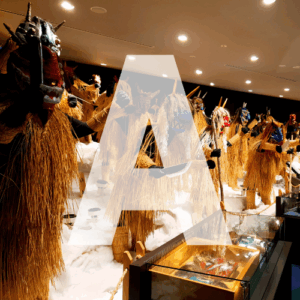
After the documentary, continue to the exhibition hall showcasing the many masks. Sometimes you’ll have limited time here before the demonstration begins, but you can always return afterward. If you’re short on time, quickly walk through the exhibition, attend the demonstration, and come back later.
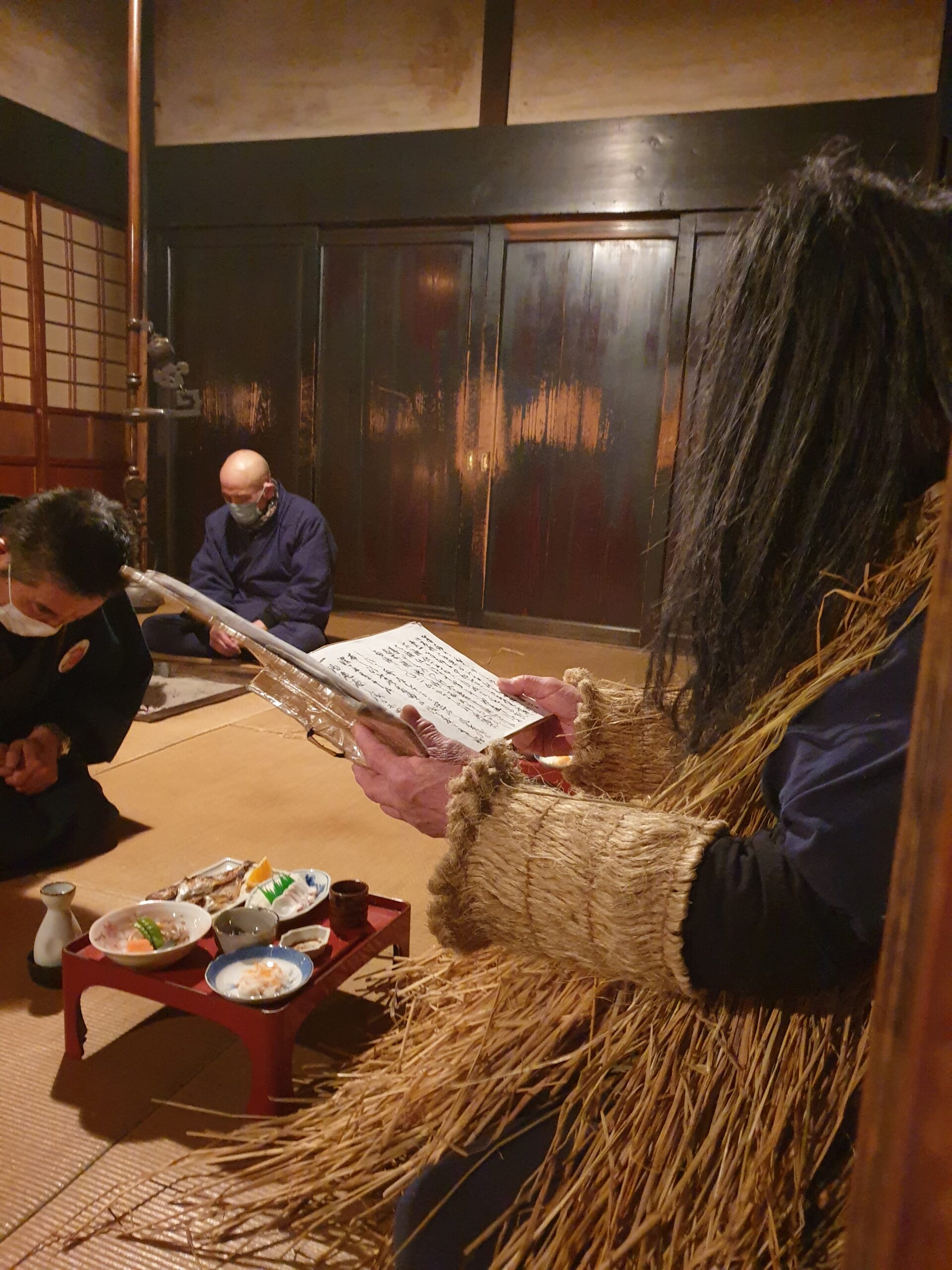
To attend the demonstration, walk through the exhibition hall, pass through the souvenir shop (come back later – there are excellent souvenirs), and exit the building. Once outside, turn right. Across a small bridge, you’ll see a small thatched-roof house. This is where the demonstration takes place.
If the door is closed, line up outside and wait for the staff to check your ticket. Once inside, make sure to take one of the tablets provided – they contain English explanations of what you’re about to experience. Even if your Japanese is fairly good, this is still recommended, as the demonstration is conducted in a very strong Akita dialect.
What happens during the demonstration… well, you’ll have to go there to find out.
After visiting the museum, you can stop by Shinzan Shrine, located just a two-minute walk uphill. This is where the Namahage Festival is held every year in February.
Namahage Taiko and Onsen
Getting to the Onsen Area
At this point, the next step should be fairly obvious. Hop on a shuttle bus and head to the onsen area. Alternatively, you can take the shuttle to another location on Oga and continue to the onsen from there.
Staying Overnight in the Onsen Area
Since all taiko performances take place in the evening, staying overnight in the area is necessary, unless you feel like taking a nearly 90-minute taxi ride from the onsen area back to Akita Station.
Before staying overnight, you’ll of course need to book accommodation. There are several ryokan and hotels in the area, and while most have English websites, their booking systems are often in Japanese. Using your browser’s automatic translation feature is highly recommended.
Most hotels are somewhat expensive, but the price usually includes both dinner, typically featuring local specialties, and breakfast.
Here is a list of the websites for some of the hotels in the area:

Namahage Taiko
Once you’ve settled into your accommodation, head to the Oga Onsen Kōryūkan Gofu building, purchase a ticket, and prepare yourself for a truly impressive taiko performance. The building is easy to find and located just a few minutes’ walk from the hotels. Seating is unassigned, so arrive early if you want a front-row seat (be there before the doors open).
You can find up-to-date performance information here: https://e-ogaonsen.com/taiko/en/
The performance usually starts at 8:30 PM, with doors opening at 8:00 PM.
You can read more about Namahage taiko here.
Learn more about Namahage
The Ritual
The Namahage ritual varies from village to village. Just as each place has its …

Theories
The oldest written source about the Namahage appears in the travelogue “Oga’s Cold Winds”, published by …

The Folktale
On New Year’s Eve on the Oga Peninsula, young men head to the shrines and into the mountains, where they …
The Costume
Each area of the Oga Peninsula has its own version of the Namahage. Whether it’s a neighborhood in the …

The Festival
In the old days, before the Gregorian calendar was adopted in Japan, the Namahage ritual was …

Namahage Taiko
In connection with the tourism industry, a unique form of performance has developed on Oga …

Tourism
In Akita, from the moment you step off the train at the main station or exit the plane at the airport, you are greeted by …

Gallery
Below, you’ll find a selection of videos showing the Namahage ritual as it is performed every year on …