The Namahage Costume
Each area of the Oga Peninsula has its own version of the Namahage. Whether it’s a neighborhood in the peninsula’s main town or a small village of thirty houses, every place has its own unique Namahage.
The Masks

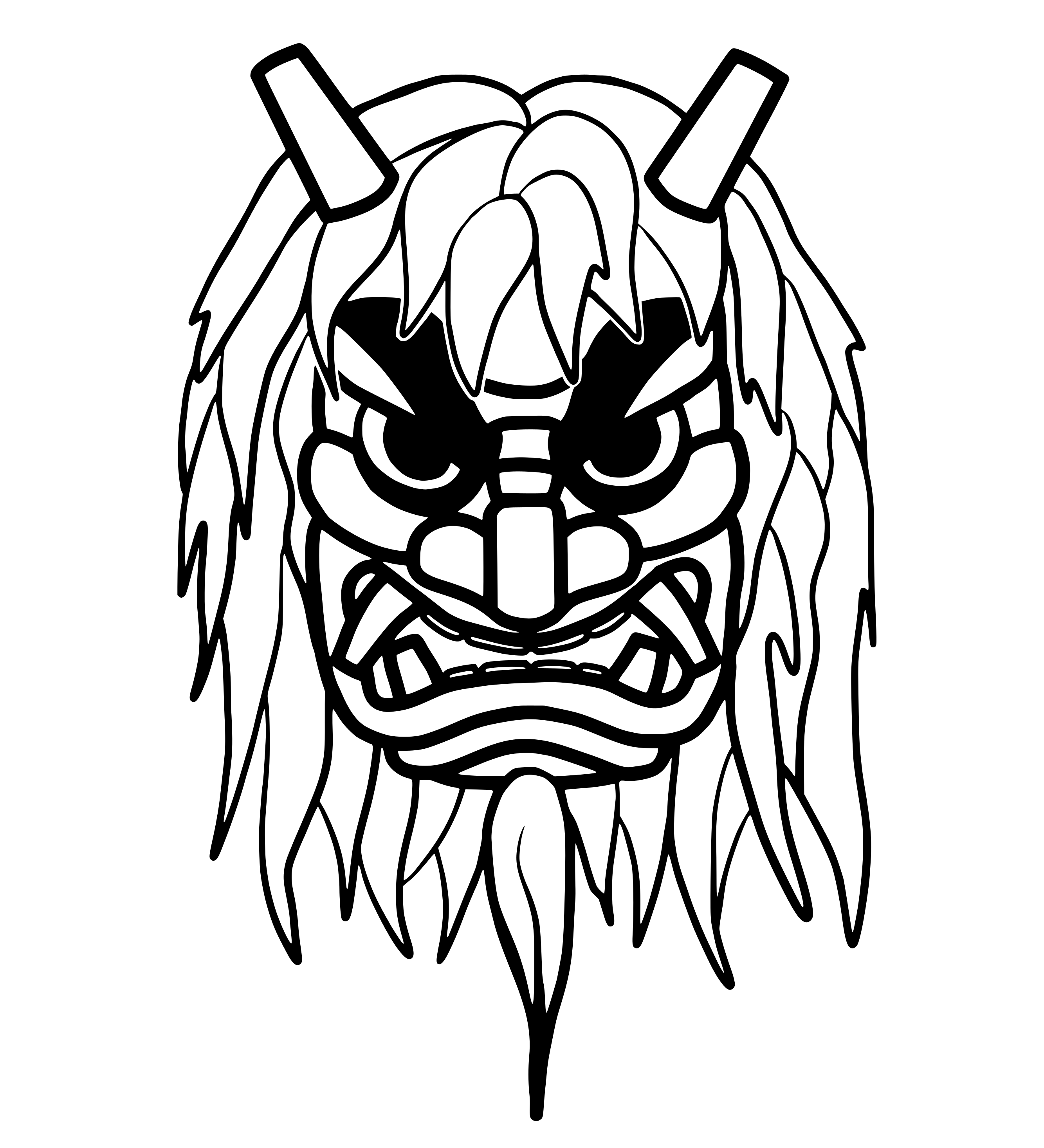
The masks are the biggest and most obvious difference from one area to another. In some places they’re made of paper, in others wood, plastic, steel, or something else entirely. Some are just big enough to cover the face, while others are so large they can’t be worn and must be held by hand. Some are red, blue, green, or even purple; others may be unpainted or decorated with silver or gold foil. Some masks have horns, while others do not.
In other words, there is no single mask design that is “correct.”
There are, however, certain features that tend to recur. In general, the masks are meant to be frightening – what that means varies depending on who made them, but they should look intimidating. The masks usually have some amount of hair, the mouth is fitted with sharp teeth, and there are typically horns on the head, though this isn’t true everywhere.
This tradition has given rise to more than 150 different mask designs on Oga, many of which can be seen at the Namahage Museum.
The Costume
The Namahage costume is made up of several parts. The main components are a cloak and a skirt, usually made of rice straw and, in some cases, of rope. This part of the costume is generally called kede, kera, or kende, depending on where you are on Oga.
If the kede is made of straw, many of the strands fall out when the Namahage visit a home. These straws are considered magical: if you put one in your wallet, it brings wealth; if you tie one around your head, it makes you wiser; and if you tie one around a part of your body that hurts, the pain disappears. The straws that aren’t used in these ways are usually left on the floor until New Year’s Day. They help purify the house of any spiritual impurity that may have built up over the year and protect the family from misfortune.

Sometimes the kede is made of rope. Opinions differ on this: some claim it comes from villages that relied mainly on fishing and therefore had little rice straw but plenty of old rope. Others believe it’s simply because rope kede doesn’t need to be replaced every year, making it easier to use.
In addition to the kede, the Namahage usually wear straw armbands, gaiters, and boots. These are very useful when trekking through deep snow in winter.
In some places, the Namahage also wear a sumo-style belt. This is especially common in areas where the costume is made with rope.
The Tools
In some places, the Namahage bring nothing with them when they visit people’s homes, but in most areas, they carry some combination of the following tools.

Something for cutting: Namahage usually carry something that can cut. This is typically a large knife (made of wood), but it can also be an axe or something similar. It’s said that this is so the Namahage can more easily slice off the burn blisters of lazy people who sit too long in front of the fire during winter.
A bucket: Namahage often carry a bucket with them. Some say it’s for collecting the sliced-off blisters.
A Shinto staff: The staff, called a gohei or ōnusa, depending on who you ask, helps emphasize that the Namahage is a deity who has come to bless the home. It is normally used by Shinto priests in ceremonies to bestow blessings, which is also what the Namahage does.
The Namahage book: This book is every naughty child’s worst nightmare, because in it the Namahage writes down every mischief a child has committed during the year (adults can end up in the book too!). On New Year’s Eve, when the Namahage visit a home, they catch all the children and begin questioning the head of the household to make sure everyone has behaved properly. In this situation, the Namahage Book is often brought out so the Namahage can check whether the family is telling the truth.
Learn more about Namahage
The Ritual
The Namahage ritual varies from village to village. Just as each place has its …

Theories
The oldest written source about the Namahage appears in the travelogue “Oga’s Cold Winds”, published by …

The Folktale
On New Year’s Eve on the Oga Peninsula, young men head to the shrines and into the mountains, where they …
The Costume
Each area of the Oga Peninsula has its own version of the Namahage. Whether it’s a neighborhood in the …

The Festival
In the old days, before the Gregorian calendar was adopted in Japan, the Namahage ritual was …

Namahage Taiko
In connection with the tourism industry, a unique form of performance has developed on Oga …

Tourism
In Akita, from the moment you step off the train at the main station or exit the plane at the airport, you are greeted by …

Gallery
Below, you’ll find a selection of videos showing the Namahage ritual as it is performed every year on …