Different Theories About the Origin of Namahage
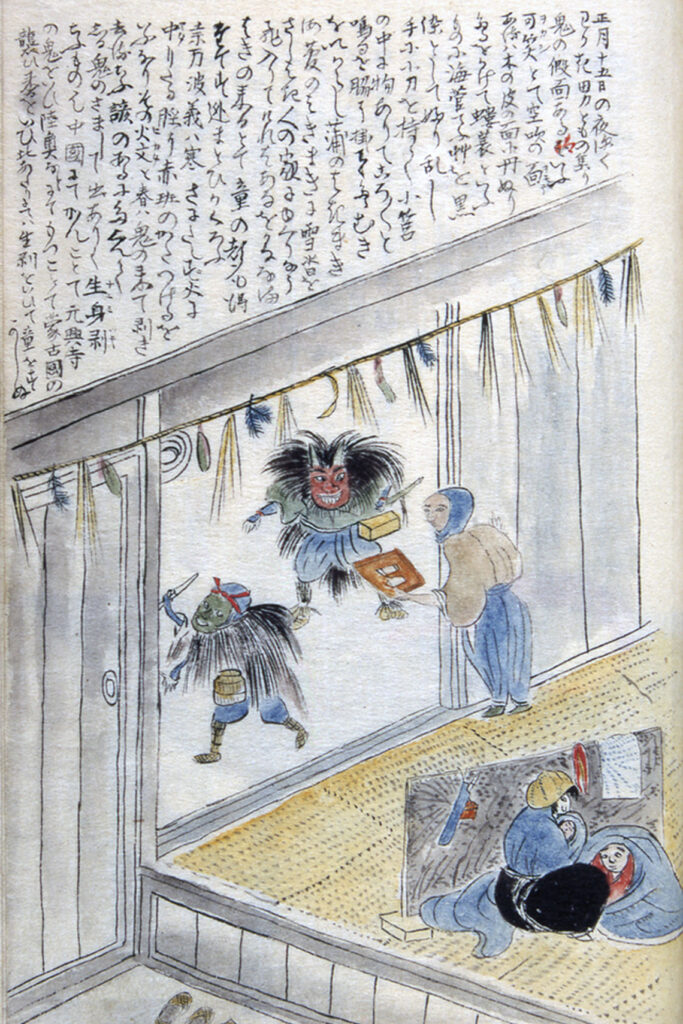
The oldest written source about the Namahage appears in the travelogue “Oga’s Cold Winds”, published by Sugae Masumi (菅江真澄) in 1811. The illustrated description, which you can see beside the text, reads as follows:
“Deep in the night, lanterns are lit and everyone gathers around the hearth. Suddenly, the Namahage appear.
They wear red masks with tall horns and shaggy hair made from black-dyed grass, and they are dressed in straw cloaks.
In their hands, they carry small knives, and they burst in all at once, shouting ‘Waaa!’
The children are so terrified they cannot even scream, saying, ‘It’s the Namahage,’ as they cling to adults and hide behind whatever they can.”
This is the oldest known description of the Namahage, but the masks make it clear that the ritual itself is far older.
As for why the Namahage ritual first emerged, there is no definitive explanation. Nevertheless, below you can find the four main theories that exist.
1. THE FOLKTALE

Namahage has its roots in an old Japanese folktale. According to the legend, demon-like creatures came down to the Oga region and caused trouble for the villagers by demanding food and sake and kidnapping people. The villagers tricked the demons by challenging them to build a stone staircase in a single night – if they failed, they would have to leave Oga. When the demons couldn’t complete the task, they disappeared. Over time, this story evolved into the Namahage ritual, in which villagers dress as the demons to warn against laziness and bring good fortune.
Read the whole story here.
2. MOUNTAIN WORSHIP
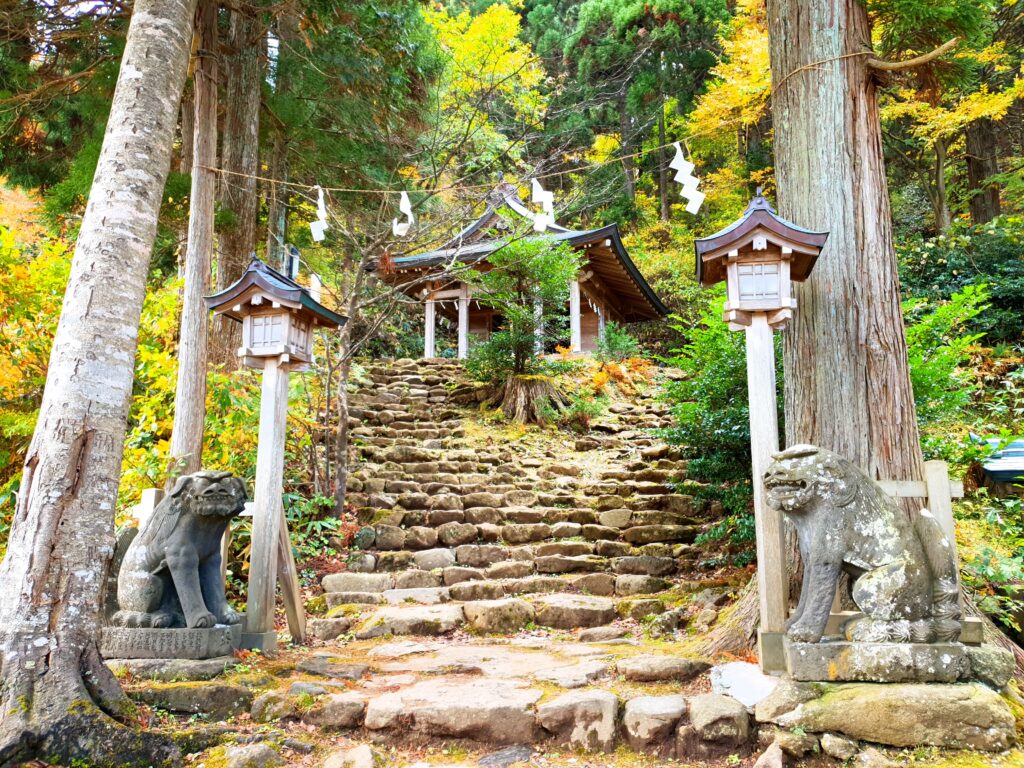
One explanation is that the Namahage grew out of a form of mountain worship on Oga. Two large mountains shape the Oga Peninsula: Shinzan and Honzan. These mountains are often referred to simply as O-yama, or “the mountain,” and they form the spiritual and physical center of life on Oga. The mountain sustains the people who live there, but it is also dangerous. Oga is one of the few places in Japan where it is common knowledge that after an earthquake, you should head out to sea to avoid landslides, rather than go up into the mountains to escape a tsunami. It is therefore not surprising that people may once have held a deep respect for the mountain – one that carried both reverence and fear.
3. MOUNTAIN ASCETICS
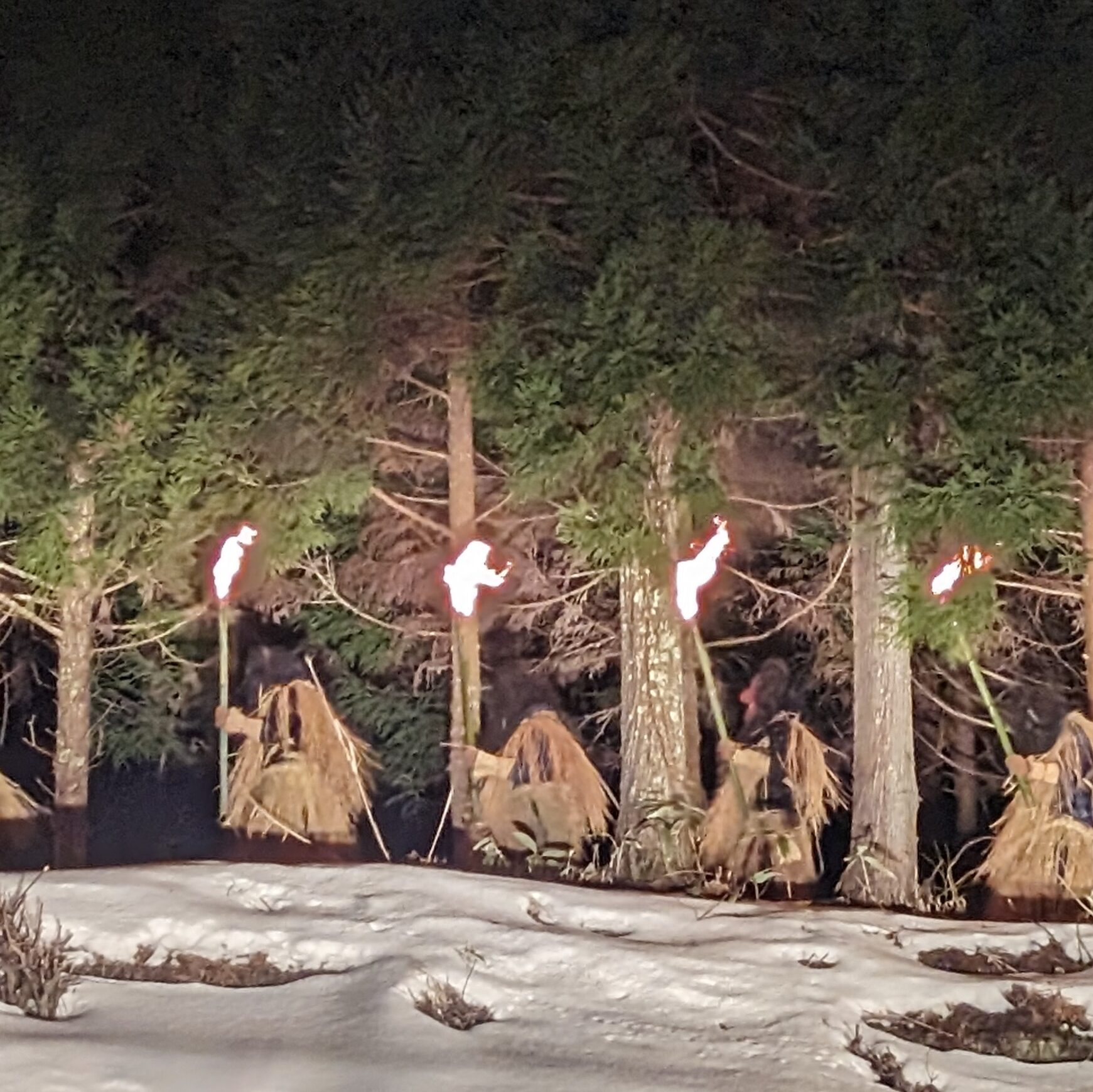
In Japan, there is a belief system called Shugendō, a blend of Buddhism and animism centered on mountain asceticism. Followers of Shugendō, known as Yamabushi or Shugensha, travel long distances through the mountains and refrain from things like cutting their hair and beards. It is believed that these ascetics may have inspired the idea of the Namahage, as they were unfamiliar strangers with wild hair and beards.
4. FOREIGNERS
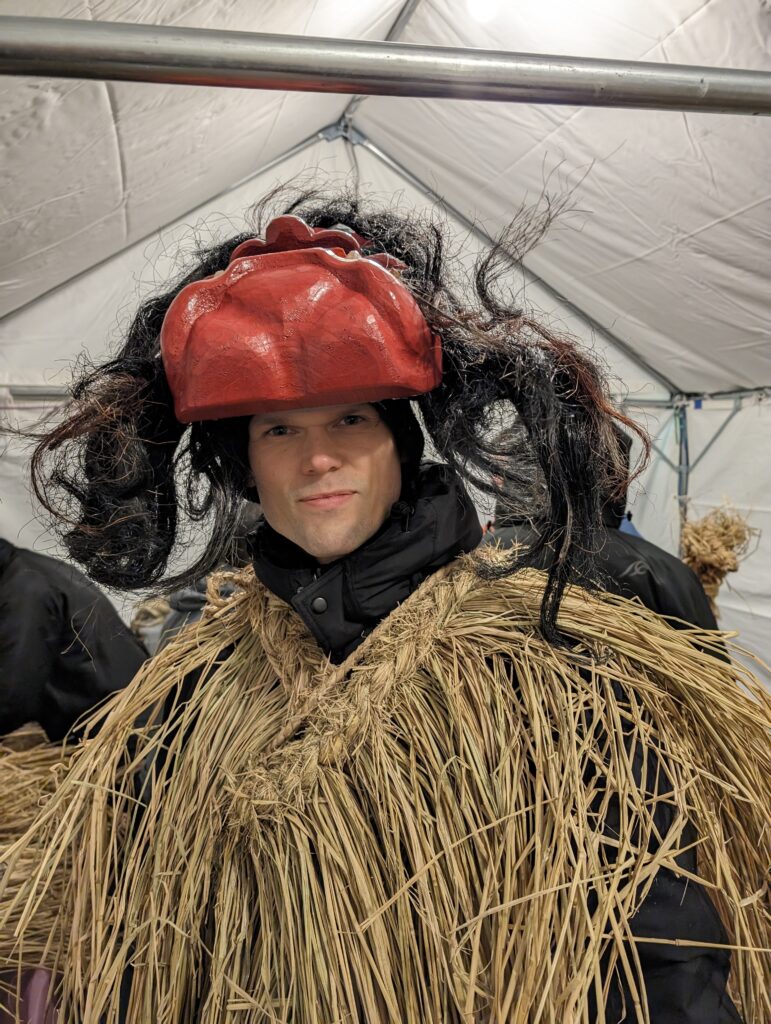
The final possible explanation for the origin of the Namahage is the idea that fishermen, perhaps from Russia, may have washed ashore on Oga’s coast and then hidden in the mountains. These foreigners, with unfamiliar facial features, heavier body hair, and an unintelligible language, may have inspired the legend of wild demons in the mountains.
Learn more about Namahage
The Ritual
The Namahage ritual varies from village to village. Just as each place has its …

Theories
The oldest written source about the Namahage appears in the travelogue “Oga’s Cold Winds”, published by …

The Folktale
On New Year’s Eve on the Oga Peninsula, young men head to the shrines and into the mountains, where they …
The Costume
Each area of the Oga Peninsula has its own version of the Namahage. Whether it’s a neighborhood in the …

The Festival
In the old days, before the Gregorian calendar was adopted in Japan, the Namahage ritual was …

Namahage Taiko
In connection with the tourism industry, a unique form of performance has developed on Oga …

Tourism
In Akita, from the moment you step off the train at the main station or exit the plane at the airport, you are greeted by …

Gallery
Below, you’ll find a selection of videos showing the Namahage ritual as it is performed every year on …