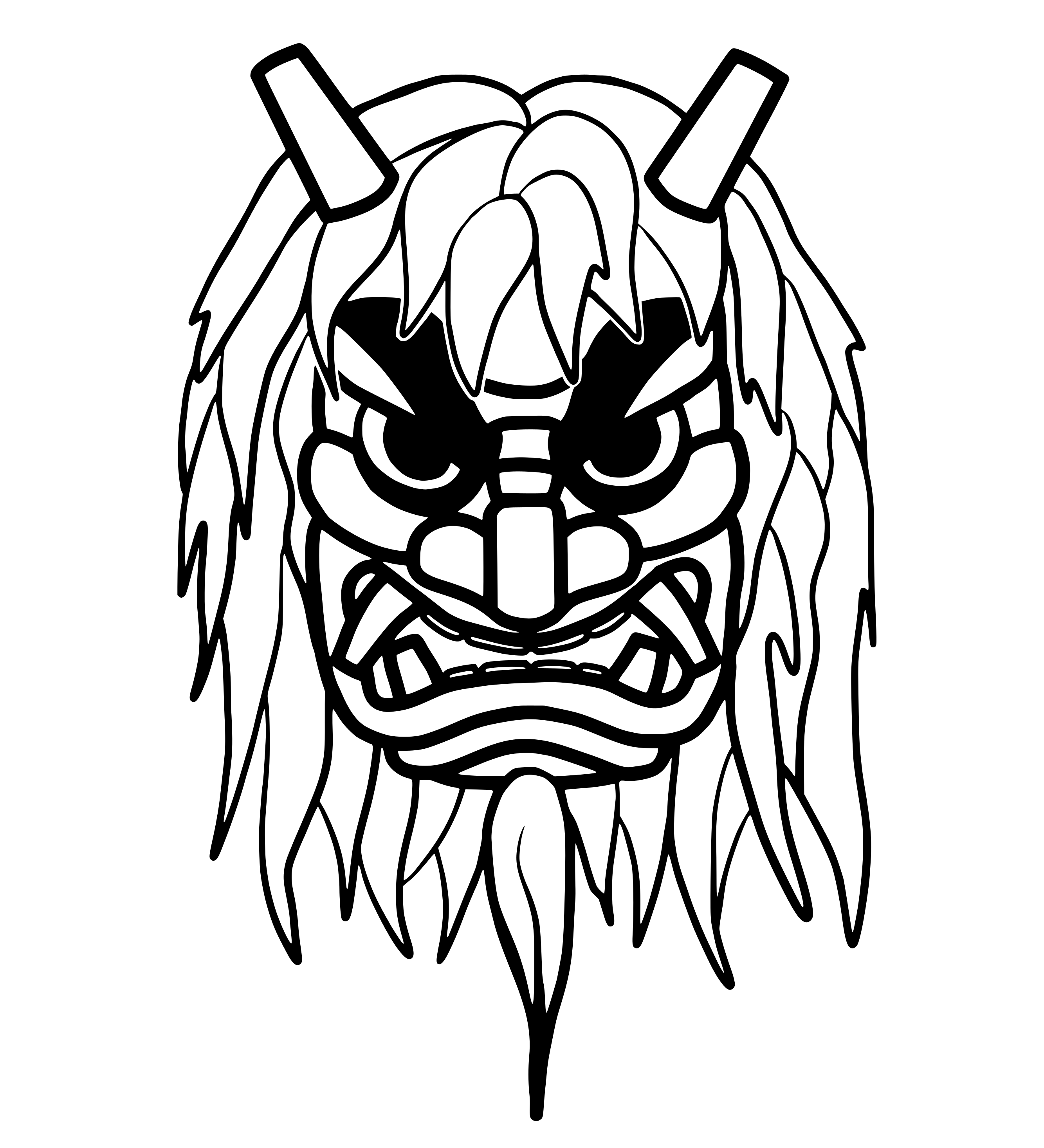
The Namahage Folktale
THE 999 STEPS
On New Year’s Eve on the Oga Peninsula, young men head to the shrines and into the mountains, where they put on straw coats or old rope garments. They undergo a Shinto purification ritual and don fearsome demon masks. As if possessed, they then descend into the villages, roaring, pounding on doors, stomping through homes, and frightening both children and adults. They are called Namahage, and this is the story of how this remarkable tradition came to be…
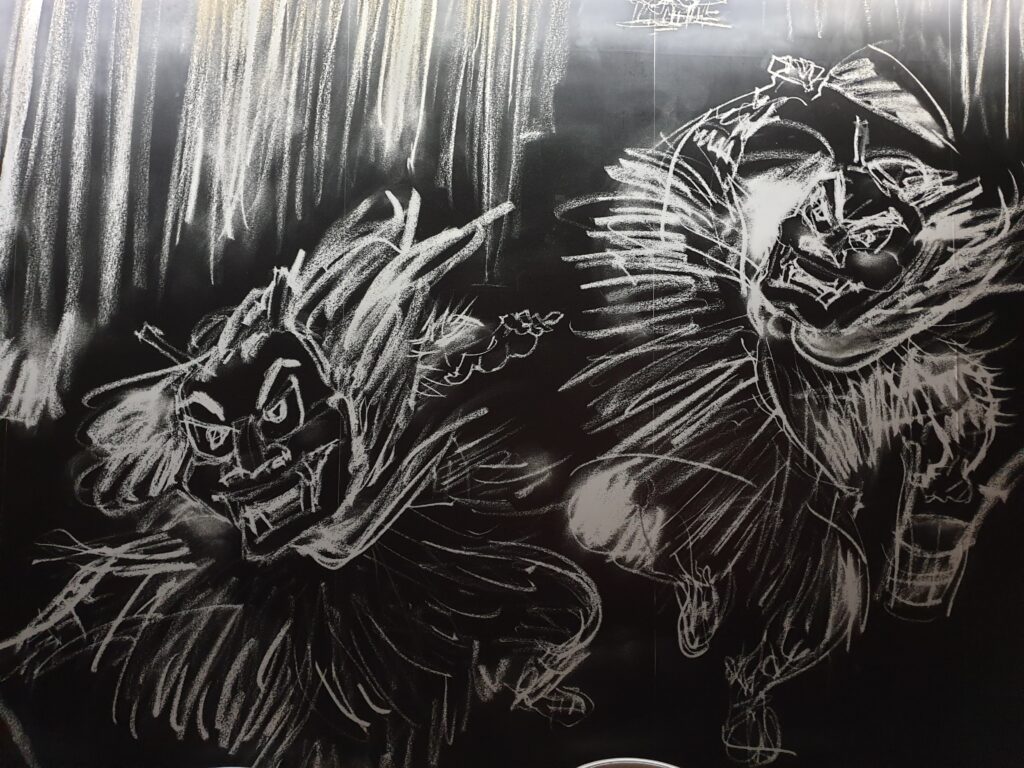
Long, long ago, it is said that the Chinese Emperor Wu of Han descended from the sky over the Oga Peninsula in a flying carriage. With him, he brought five bats, which, through the emperor’s magic, transformed into powerful demons. Emperor Wu set the demons to work in the mountains and never allowed them any rest.
But on the fifteenth day of the new year, even the demons had had enough. They complained to Emperor Wu and begged him for a little time off. After listening to their whining for a while, he finally agreed to give them one day of rest, when they could come down from the mountains and visit the villages. He told them this would be their single day off each year. The demons roared with joy and charged down the snow-covered mountainsides toward the villages below.
“Villigers! Bring out your sake!” they shouted as they kicked in the door of the largest house in the village and stomped into the main room.
The terrified residents handed over all the sake they had. When the children in the house saw the demons, they burst into tears and couldn’t be consoled, no matter what their parents did.
Annoyed by the whining children, one of the demons said, “Give us your crying children! We’ll take them back up into the mountains and roast them on a spit until they’re nice and crispy. What a delicacy they’ll make.”
“Have mercy! We’ll make them quiet,” the parents begged in terror. They grabbed the children and pushed them into a cupboard so the demons wouldn’t hear them cry.
The demons let the matter rest, but suddenly one of them noticed something that sent it into a fit of wild rage.
“What are those red marks on your shins? I know what that is! You must have gotten them from sitting by the hearth all day doing absolutely nothing. We work so hard our bones creak by the end of the day, and you think you can laze about by the fire? Come here, I’ll peel that red skin right off you!”
The demon then grabbed a large butcher’s knife and seized the lazy person, who writhed and struggled to break free.
“Have mercy! I promise I’ll work hard for the rest of my life!” the person pleaded pitifully, and at last the demon let him go.
Still not satisfied after their drunken rampage, the demons kidnapped some of the village’s girls and carried them back to the mountain.
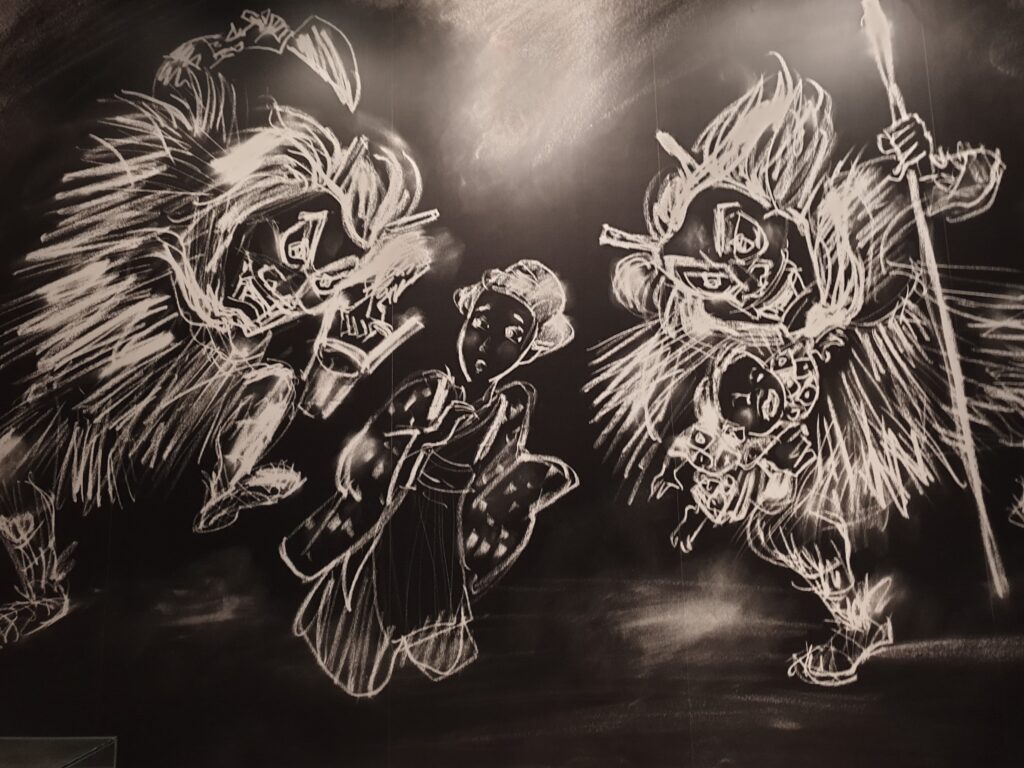
After a few years, Emperor Wu finally returned to China, leaving the five demons in the mountains. Now free to do as they pleased, the demons remembered how much fun they’d had in the villages and decided to go there every day. The villagers quickly realized what was happening and knew they had to do something. But what could they do? Even if they took up axes and hoes, the demons could easily overpower them. Instead, they came up with a clever plan. They challenged the demons to a wager.
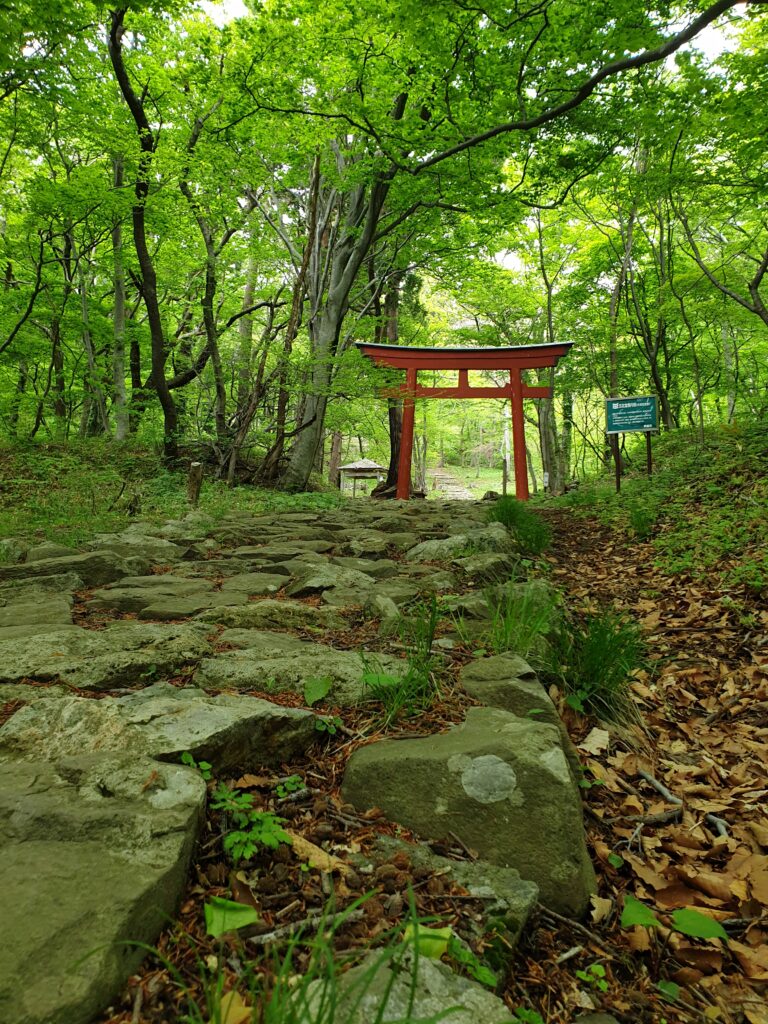
On the southern slopes of Mount Honzan stood a shrine. The shrine sat high on the steep mountainside that dropped down toward the sea. The villagers challenged the demons to build a stone staircase of one thousand steps, all the way from the sea up to the shrine, before the rooster crowed the next morning. If the demons could finish the staircase in time, the village would give them a maiden as a yearly offering. But if they failed, even if just a single step was missing, they would have to return to the mountain and never come down again. The demons roared with excitement and accepted the wager.
The nearest mountain with good stone for building a staircase was Mount Kampu, half a day’s walk away. The villagers knew this and were certain the demons would never manage to finish the staircase in time. But the demons flew through the air and covered the distance in an instant, lifting enormous boulders as if they weighed nothing and carrying them back as swiftly as the wind.
Hundred steps …
Three hundred steps …
Five hundred steps …
When the villagers saw the staircase taking shape before their eyes, they turned pale. Dawn was approaching, but so was the thousandth step, and they realized they were about to lose the wager. So they called for a man in the village known for his skill at imitating sounds and asked if he could trick the demons. He agreed at once, took a deep breath, and shouted:
”COCK-A-DOODLE-DOO!”
When the demons heard what sounded like the first rooster’s crow, they stopped their work. They looked at the staircase and saw that it was only 999 steps high. At first, they were shocked, but the shock quickly turned to fury. One of the demons grabbed a thousand-year-old cedar tree standing nearby and tore it out by the roots in anger. Then he flipped the tree upside down and slammed it back into the ground so it stood on its head. After that, the demons returned to the mountain and were never seen again.
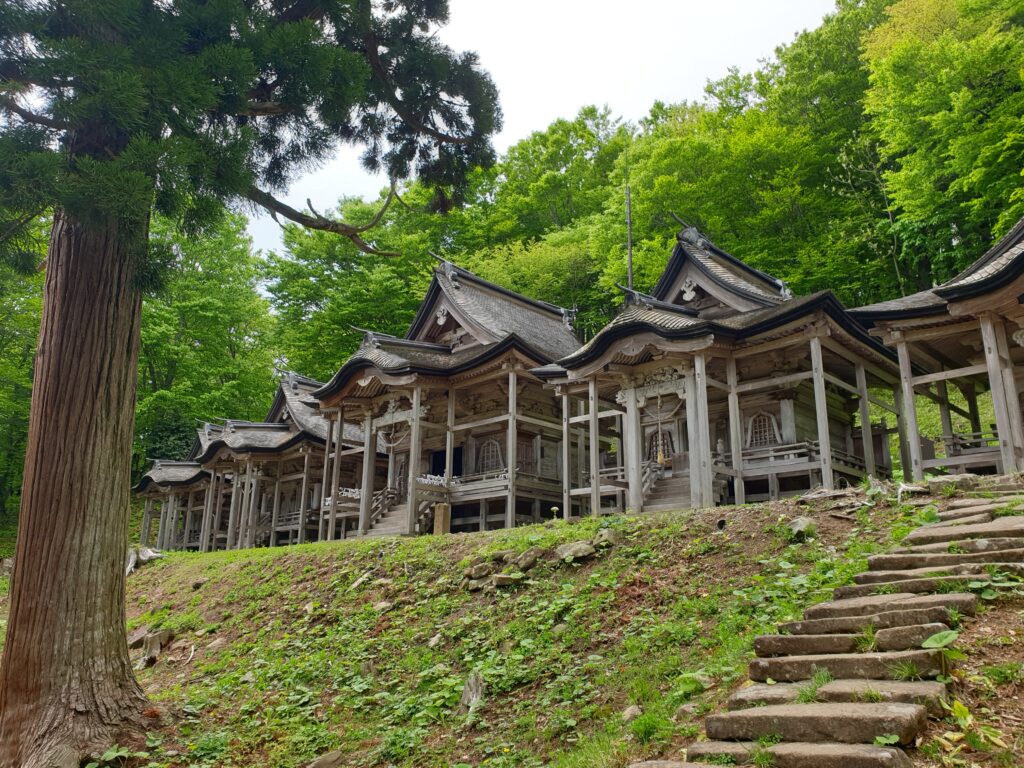
Many years later, it is said that the villagers began to worship the five demons and pray to them for protection, treating them as the gods of the mountains. The villagers even built five structures at the shrine – one for each demon. The people of the Oga Peninsula also built a shrine for Emperor Wu and called him the Red God, Akagami. Today, the Inner Akagami Shrine stands at the top of Mount Honzan, with a path leading down to the five shrine buildings known as Goshadō. And from the foot of Goshadō all the way down to the sea lies a stone staircase of 999 steps.
When this happened, no one knows, but over time, the demons came to be called Namahage, a name believed to mean “Peelers of burn blisters.”
THE END
Learn more about Namahage
The Ritual
The Namahage ritual varies from village to village. Just as each place has its …

Theories
The oldest written source about the Namahage appears in the travelogue “Oga’s Cold Winds”, published by …

The Folktale
On New Year’s Eve on the Oga Peninsula, young men head to the shrines and into the mountains, where they …
The Costume
Each area of the Oga Peninsula has its own version of the Namahage. Whether it’s a neighborhood in the …

The Festival
In the old days, before the Gregorian calendar was adopted in Japan, the Namahage ritual was …

Namahage Taiko
In connection with the tourism industry, a unique form of performance has developed on Oga …

Tourism
In Akita, from the moment you step off the train at the main station or exit the plane at the airport, you are greeted by …

Gallery
Below, you’ll find a selection of videos showing the Namahage ritual as it is performed every year on …